Nearest Neighbor Classifier
Introduction
Training
In the training part we just memorize all data and labels
The time complexity is
Predict
The algorithm find the most similar distance with the input image by computing their distance
The time complexity is , since we compare the input with images
This is bad in complexity: We can afford slow training, but we need fast testing
Distance Metric to compare images
L1 (Manhattan) Distance
where refers to each pixels, and , refer to RGB value of the two images
L2 (Euclidean) Distance
Right choice of distance metric can not only improve your accuracy, but also allow you to apply -nearest neighbors learning algorithm to other types of data besides images
Classification Regions
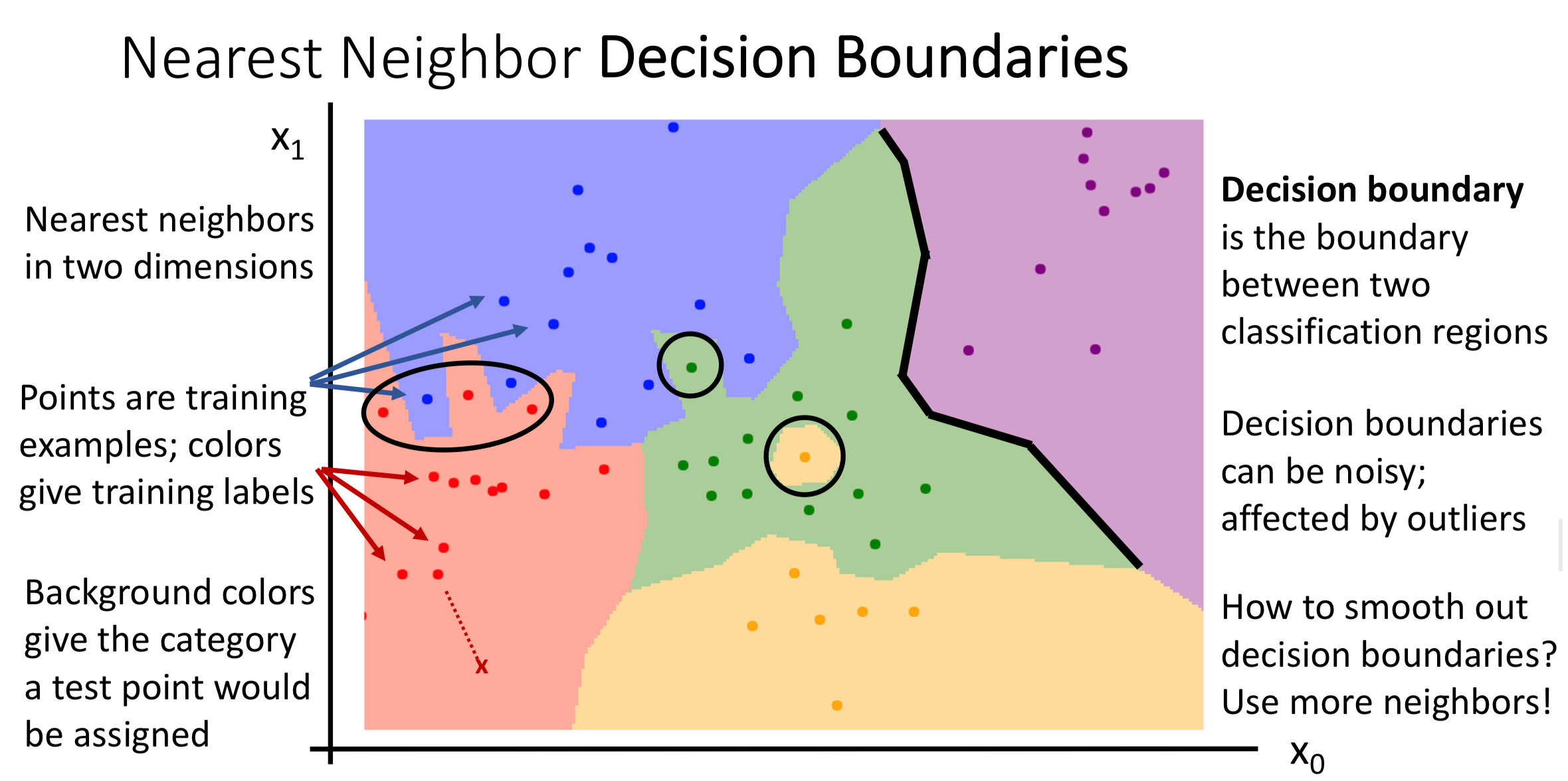
When the value of pixels in the image are in certain range, the nearest neighbor will be a particular category. We call this range the classification region
Decision Boundaries
There will be boundaries between different classification regions. We called these boundaries the decision neighbors
-Nearest Neighbors
Problem
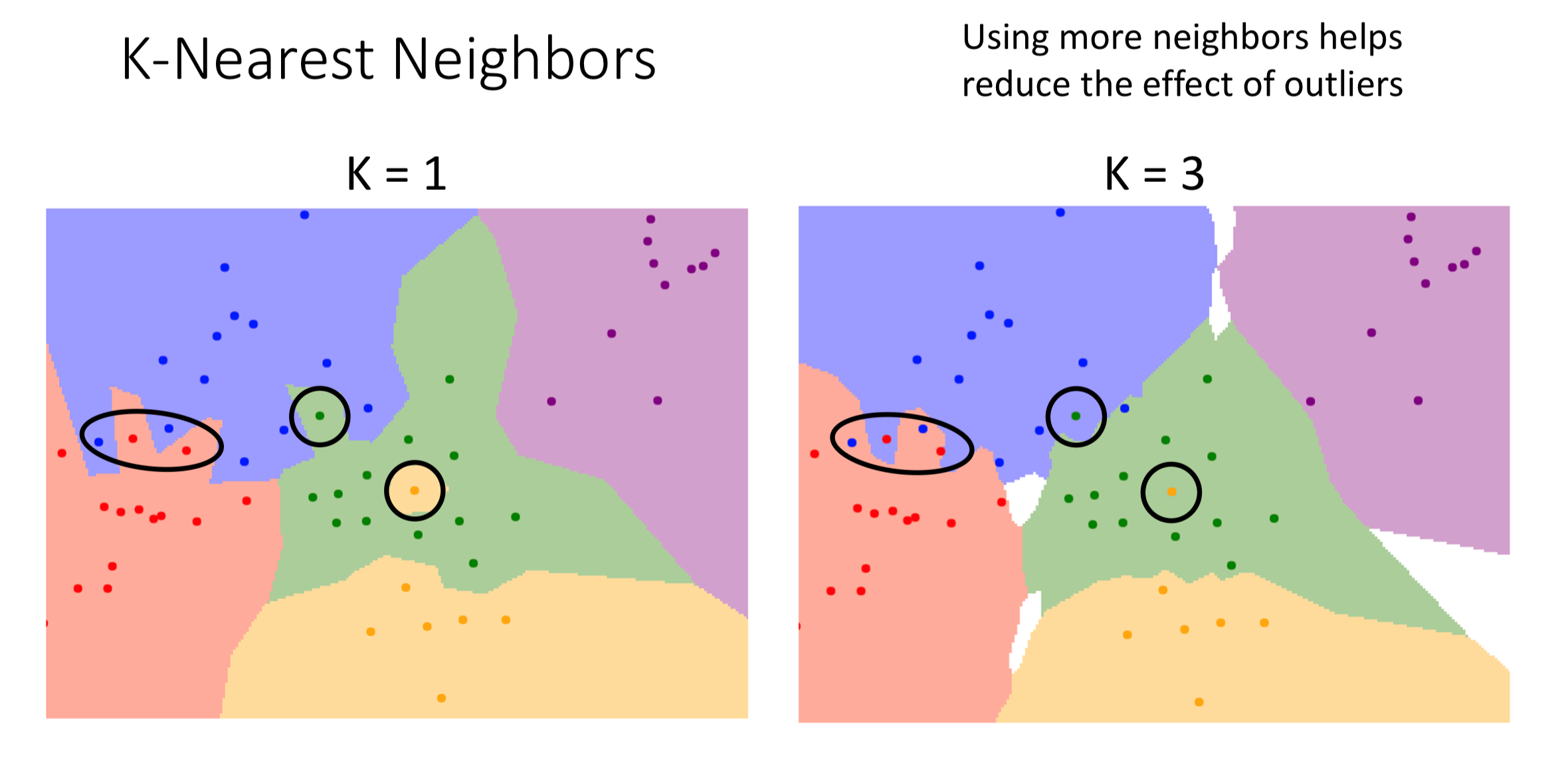
Sometimes the outliers in the training data will make inappropriate classification regions which will cause error in classification, we need a way to get rid of outliers
Solution
Instead of copying label from the nearest neighbor, we take the majority vote from closest points
However, sometimes we’ll have the same vote for more than one label. In this situation, we’ll use other ways to determine the label for this input
Universal Approximation
Introduction
As training samples approach infinity, the data becomes arbitrarily dense in the input space. This means for any query point , we can find training points arbitrarily close to it. Since the nearest neighbor simply returns function value of the closest training point, and that the closest point can be made arbitrarily close to , the prediction approaches the true function value
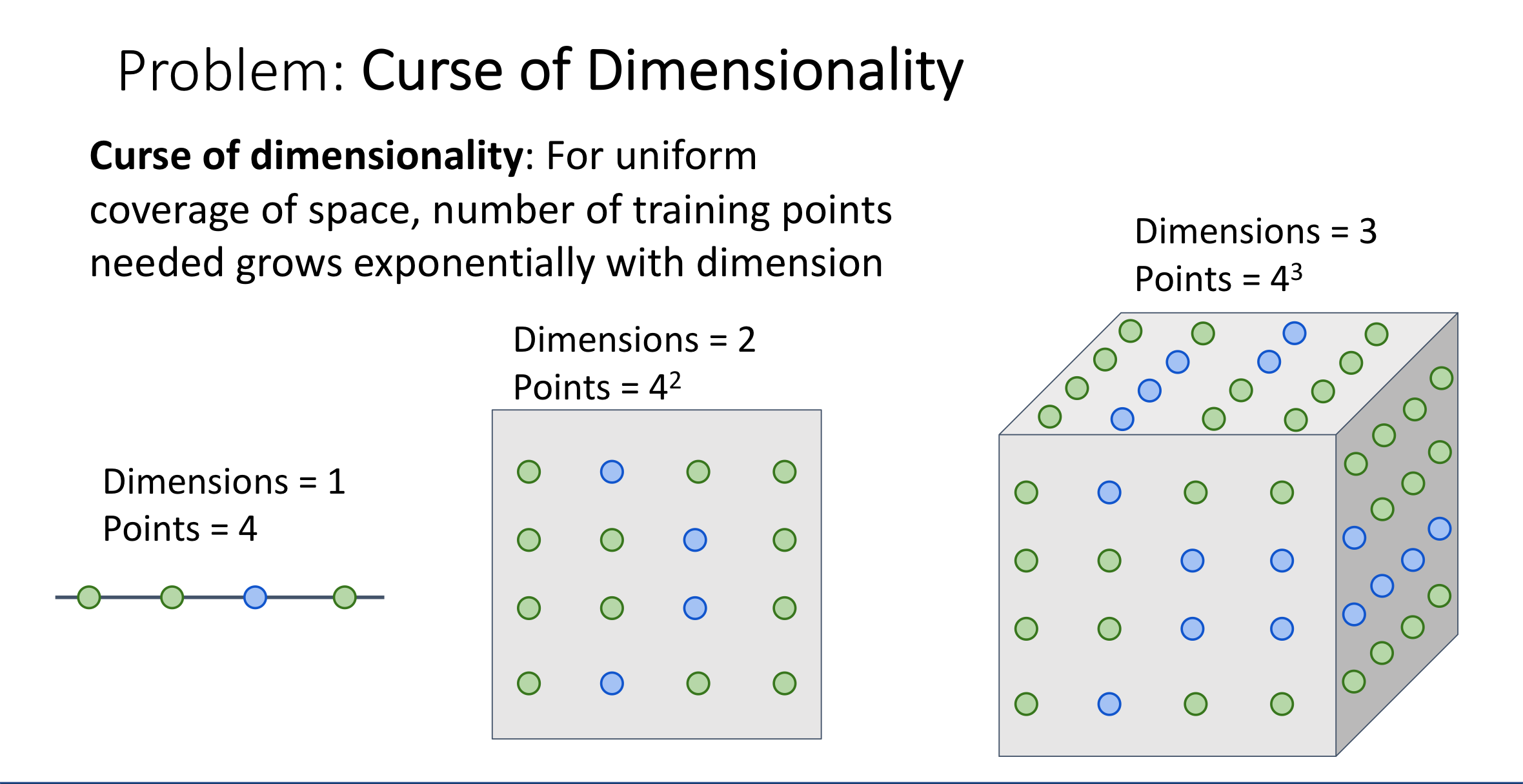
Problem: Curse of Dimensionality
As we increase the dimensions in a space, the number of data points required to maintain the same density of coverage grows exponentially